ILO

young man and women in hard hats

While significant gains have been recorded in poverty reduction, education, and social protection coverage, structural inequalities, labour market informality, gender disparities, and declining trust in institutions continue to impede inclusive and sustainable development. The 2026 World Day of Social Justice recognizes the progress achieved and acknowledges persistent and emerging challenges. It calls for strengthening policy coherence across economic, social, and environmental dimensions, reinforcing multilateral cooperation, and placing equity and solidarity at the center of global policymaking.

As a child helping his family make shoes, Jestoni Go Padua later became a school instructor, now empowering young people with skills for decent work and a better future.

SENATIC is a joint initiative of Colombia’s Ministry of ICT, SENA and the ILO that equips young people such as Rafael Meza, with digital and technical skills through secondary education combined with certified training from global tech companies.

Between 2024 and 2026, the programme will train more than 60,000 students across all 32 departments of Colombia, with nearly 20 percent of beneficiaries coming from indigenous communities.

IRENA-ILO report shows 2024 renewable capacity records, but jobs reached only 16.6 million, revealing regional imbalances, automation impacts, inclusion gaps.

A group of volunteers trying to dislodge a truck stuck in mud.

A new UNV–ILO study reveals that informal, direct person-to-person help makes up nearly 70 per cent of global volunteering, yet remains largely invisible, shaped by age, gender, income, location, and gaps in formal services.

Through the ILO’s SCORE programme more than 1,700 small and medium-sized enterprises have improved safety, productivity and competitiveness, helping them grow and create better jobs.

Lata Korde is a disability inclusion facilitator from Maharashtra, India. With support from the ILO’s SPARK project, funded by IFAD, she gained new skills and confidence and now advocates for the rights and employment of persons with disabilities.

A group of women workers in a greenhouse.

The WAFIRA project supports Moroccan rural women migrants through entrepreneurship training and financial literacy, strengthening independence and sustainable livelihoods at home.

A man leading a community workshop on disabilities.

From 2021–2024, the SPARK initiative strengthened disability inclusion in rural India, Malawi, Burkina Faso and Mozambique, training facilitators and expanding access to services ahead of International Day of Persons with Disabilities.

 
group of young men in a car repair shop

This episode from ILO's PROSPECTS podcast explores how the private sector can drive economic inclusion of young refugees by expanding access to decent work and protecting their rights at work. Roman Bojko, Human Rights and Social Impact Leader at Ingka Group shares more about the company’s global Skills for Employment initiative and lessons learned from integrating refugee talent across 26 countries. The conversation highlights how hiring refugees is not just the right thing to do - it’s also good for business, fostering innovation, resilience, and inclusion in the workplace.

A graphic design with a light blue background patterned with geometric shapes—circles, semicircles, and triangles in varying shades of blue. At the center-left, there is the International Labour Organization (ILO) logo in blue and the Second World Summit

Ahead of the World Summit for Social Development (Doha, 4-6 November), the International Labour Organization (ILO)  is launching a special podcast series. In this first episode, Sabina Alkire of Oxford University and ILO’s Manuela Tomei discuss progress and gaps since the 1995 commitment to advance social development for all.

Natalia Cebanu from Moldova shares how access to childcare support gave her greater freedom and equal opportunities as a working mother of two.

A group of workers engaged in manual labor along a canal.

In this episode of the Future of Work podcast, ILO Research and Publications Director Caroline Fredrickson explains what the ILO’s new report on social justice reveals about global progress, the challenges that remain, and how leaders can build fairer and more resilient societies.

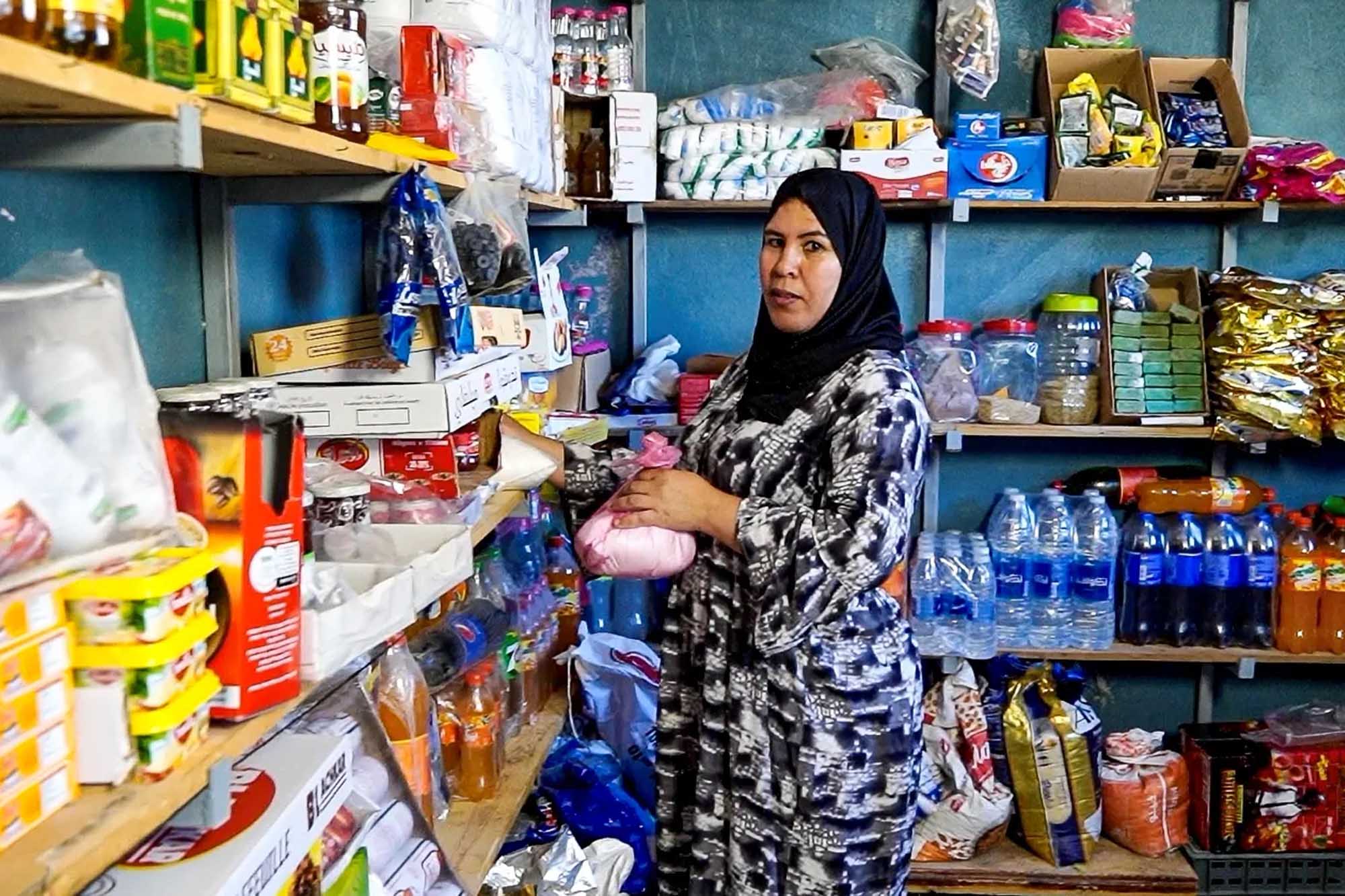
A woman entrepreneur standing inside her grocery store.

Fatima Laanieg has always been drawn to hands-on work. After taking care of her home and children, she sought to contribute financially. Four years ago, she became a seasonal agricultural worker in Spain, which went well. Fatima dreamed of starting her own business but lacked resources. In 2022, she joined WAFIRA, an International Labour Organization (ILO) programme for women run by Morocco’s National Agency for the Promotion of Employment and Skills, where she expressed her desire to open a grocery shop. With training and support from her husband, she gained confidence. Her dream is to expand her small shop into a supermarket and inspire her son to learn the trade. Fatima is committed to growing her project step by step.