Women and Gender Equality

A group of five women facing the camera in a triangular shaped formation.

International Women’s Day 2026 arrives as justice systems falter under conflict and repression, leaving women with only 64% of men’s legal rights. Across most countries, women face higher barriers to justice—denied lawyers, priced out of services, dismissed, or blamed when reporting abuses. For hundreds of millions near conflict zones, justice is absent entirely. When justice fails, women pay. Real justice means enforceable rights, believing survivors, accessible legal aid, and support after violations. UN Women urges collective action to build and fund justice systems that deliver equality. 

Woman  in wide-brim hat holds a green melon amid a display of melons in a garden.

Across fragile regions, women restore forests, manage scarce resources, and rebuild livelihoods, showing how climate resilience and peace grow stronger when communities empower women.

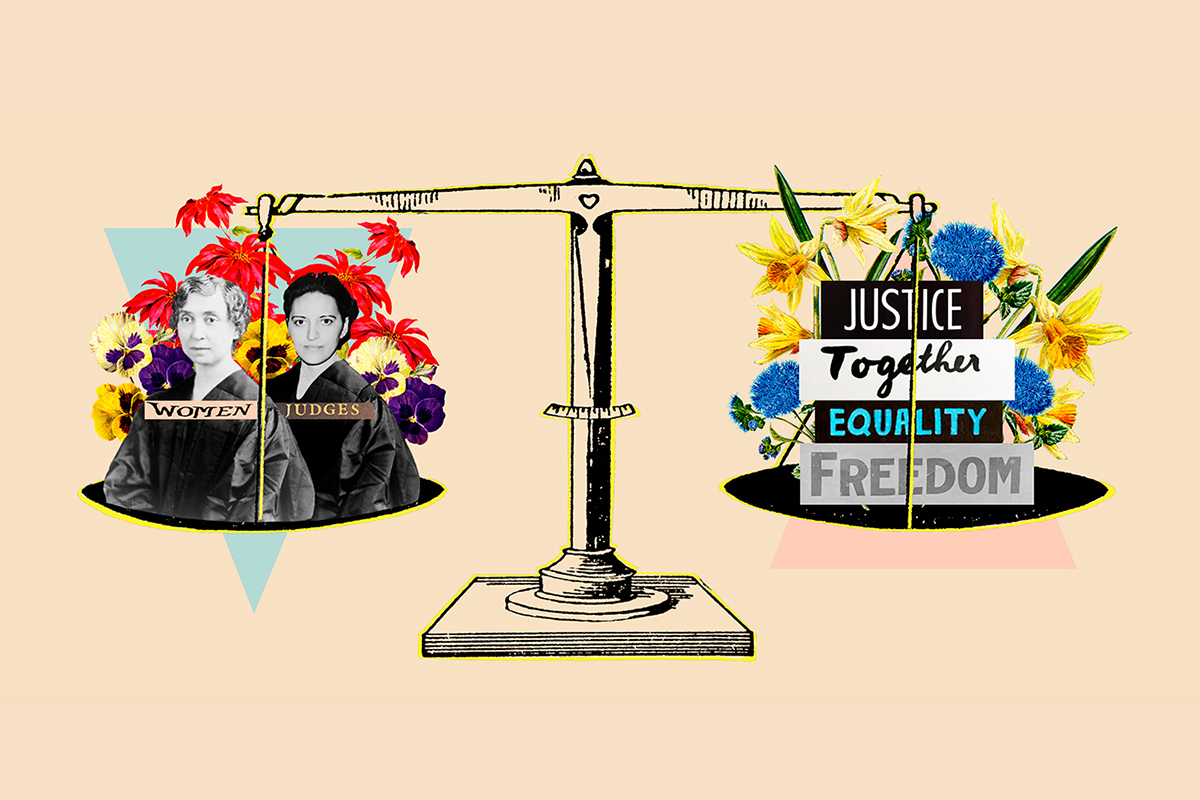
Illustration of a scale of justice with photos of women judges on one side and signs reading "justice, equality, freedom, together" on the other side.

Women judges are vital to achieving justice. They strengthen accountability, bring new perspectives and, through their leadership, help fight corruption. Representation varies widely: women make up more than 50% of judges in Europe and the Americas, but only 31% in Oceania, 30% in Africa and 29% in Asia. While progress towards gender equality in justice systems is evident, their numbers drop sharply in senior roles. On the International Day of Women Judges (10 March) join us in promoting equal representation at all levels of the judiciary, celebrating progress, and raising awareness of the challenges ahead.

A woman speaking at a meeting of the Commission on the Status of Women in 2025.

From 9–19 March, the world gathers in New York for the 70th Commission on the Status of Women (CSW), the UN’s largest forum on gender equality and women’s rights. What happens here influences laws, policies, funding, and accountability worldwide. This year’s theme is clear: rights, justice, and action for all women and girls. We are in a critical point: women and girls hold just 64 per cent of the legal rights that men do. This is why this meeting calls on governments, institutions and communities everywhere to show up for action. Follow the meetings and side events on UN Web TV.

Women of different ages and ethnicities smiling at camera.

This International Women’s Day (8 March), demand equal rights and equal justice. Women worldwide hold just 64% of the legal rights men do. At this pace, closing the gap could take 286 years. From work and pay to safety, family, property, and retirement, laws still disadvantage women and girls. It’s time to dismantle discriminatory laws and harmful norms. Join UN Women’s campaign, use its materials and follow our live event on 9 March ahead of the Commission on the Status of Women (9–19 March), the UN’s largest annual forum dedicated to gender equality and women’s rights.

A portrait of Catherine Mootian, a survivor of female genital mutilation.

Globally, women face violence and discrimination, and justice systems fail, making accountability, legal aid, and systemic reform urgently necessary. Case is now open.

A girl standing in a laboratory, wearing protective lab glasses and looking toward the camera.

Science, technology, engineering, and mathematics (STEM) are vital for sustainable development, yet women and girls continue to face barriers to entering these fields, with only 35% of STEM graduates being female. UNESCO promotes gender equality in education by enhancing girls' access to quality STEM learning, improving teacher training, and supporting mentorship programs. By advocating for inclusive policies and celebrating women in science, UNESCO aims to challenge stereotypes and eliminate persistent obstacles. The International Day of Women and Girls in Science highlights these issues, featuring voices like Biology and chemistry teacher Edinah Nyakondi and her students from Kenya.

A girl holds her robot while her classmates work in an active robotics class behind her.

Artificial intelligence (AI) and other emerging technologies are reshaping economies, research and daily life, but too many people are still left out of the gains. The 2026 International Day of Women and Girls in Science (11 February) highlights the power of combining AI with social science, science, technology, engineering and mathematics (STEM), and finance to build inclusive futures for women and girls. The Day reaffirms a truth: equality in science drives human progress. We must ensure that women and girls can pursue their scientific ambitions—for their rights, and for the benefit of all.

laughing teenagers perform for their peers

Throughout 2025, the world read about the record number of conflicts and climate crises tearing apart countries and communities. We heard how steep cuts to humanitarian funding are spelling disaster for millions of people. We watched as AI expanded and digital violence against women and girls took a dangerous new turn. But we also saw ordinary people stepping up and doing extraordinary things: From the midwives delivering babies safely as war ravages Gaza to the teenagers helping each other navigate a path away from adolescent pregnancy in the Philippines, so many individuals showed courage, resilience and a refusal to give up in the face of immense odds. Girls at a safe space in eastern Zambia perform a role-play scenario about peer pressure.  

collage of portraits of women of different ages and ethnicities

The International Women’s Day website was the most visited UN Observance of 2025, reaching over one million views. This strong engagement reflects global interest in gender equality, women’s rights, and the power of collective action. The site brought together advocacy and inspiration, highlighting the voices, achievements, and challenges of women and girls worldwide.

Two women smiling at each other.

Nearly half of global migrants are women whose vital care work sustains economies, yet harmful stereotypes continue to fuel discrimination, exclusion, and violence.

 
Four girls standing in line, smiling at the camera in a youth centre.

Life in refugee camps is harsh for girls, marked by overcrowding, lack of privacy, and limited access to food and basic necessities. They face heightened risks such as sexual violence and child marriage, alongside disrupted health services and education. Despite these challenges, girls are advocating for change, using their experiences to combat harmful practices and promote a future filled with peace and dignity. The United Nations Population Fund (UNFPA) empowers these girls and helps them build a more hopeful future.

Meet Dr. Rosa Vásquez Espinoza and Dr. Mounia Laassiri, young scientists breaking barriers in STEM and inspiring global gender equality through their UNESCO-awarded achievements.

A woman working in a field of fonio.

Achieving gender equality is essential to ending poverty, hunger, and tackling climate change. Rural women, who produce nearly half of the world’s food while safeguarding the environment, are key in this effort. Yet, they still face deep inequalities while sustaining their families through unpaid work.  This International Day of Rural Women (15 October), under the theme “The Rise of Rural Women: Building Resilient Futures with Beijing+30”,  calls for their rights and full participation - reflecting the spirit of Beijing+30,  a global commitment to gender equality for all women, everywhere.