

As conflicts spread and intensify, classrooms are increasingly caught in the crossfire, with attacks on education continuing to climb. The International Day to Protect Education from Attack (9 September) asks a pressing question: “Can Education Survive Attack?” UNESCO’s new action plan aims to help schools prepare for attacks, protect learning during crises and recover afterwards. From supporting teachers to restoring classrooms and creating safer places to learn, the goal is to keep education alive when it is needed most.
Education

In Buenos Aires, thousands of young people are gaining hands-on experience with the technologies and creative skills shaping the future of work. Three TUMO learning centres give students aged 12 to 18 free access to subjects including artificial intelligence, robotics, programming, animation, music and video game development. Designed to complement formal schooling, the centres emphasize self-directed learning and exploration. Around 20,000 students are expected to use the facilities each year, helping broaden access to digital education. For students like Lourdes, the programme is already helping them discover new interests, develop creative projects and consider future careers.

"Refugees do bring so much to the community, they bring a whole different culture, a whole different lens on life, and that is powerful and important."
War is Mary Maker’s earliest memory. Born in South Sudan and named Nyiriak — meaning "war" — she spent her youth living and working in one of the world’s largest refugee camps. Now a Goodwill Ambassador for UNHCR, the UN Refugee Agency, she is raising her voice on behalf of those she left behind, helping refugee students land scholarships to top universities.
“I want to be seen. I want to be heard. I want to be acknowledged. I want to be at the table, making decisions and feeling like a part of something. Are you able to see us? Are you? Are you able to go beyond the news and really understand that this is someone like you?”
After her family fled to safety, Mary built a new life of opportunity through education and hard work – finding her feet, and her voice, on stage. In this episode, she shares how she overcame a childhood marred by death and conflict, and how theater became both her refuge and her path forward.
Photo: ©UNHCR

The number of children and young people out of school has risen for the seventh consecutive year, up to 273 million, driven by population growth, crises, and shrinking budgets. This is the main finding of UNESCO’s 2026 Global Education Monitoring (GEM) Report, the world’s reference on the state of education. One in six children of school age worldwide are excluded from education, and only two in three students complete secondary school. Yet, many countries are making significant progress.

UNESCO’s International Day for Digital Learning (19 March) spotlights how schools, teachers, learners and families use technology to strengthen education while addressing its risks. Established in 2023, it promotes norms, practices and wider access to quality digital learning. This year’s observance highlights the push to build digital commons, trusted public online spaces and resources that extend public education into digital environments. It also marks the launch of the Charter for Public Digital Learning Platforms, offering guidance for governments to design public digital learning ecosystems.
US First Lady to preside over UN Security Council session
US First Lady presides over UN Security Council session
First Lady Melania Trump makes history at the United Nations today as she takes the gavel for the United States during its Security Council presidency, highlighting education’s role in promoting tolerance and global peace. Her appearance marks the first time a sitting US First Lady presides over a Security Council meeting, and the first instance of any first lady or first gentleman doing so. Today’s session addresses education, technology, peace, and security, with Under‑Secretary‑General Rosemary DiCarlo briefing on behalf of the Secretary‑General. Follow the meeting live at 3 p.m. New York time.

Exposed to the world of science, technology, engineering and mathmatics (STEM) at a young age, Leen Alaya, a 24-year old innovator from Aleppo, Syria, is on a mission to revolutionize the way children learn programming - with a little help from UNDP. “Some of my earliest memories are of accompanying my mother to work at the University, where she was a professor in the Faculty of Computer Systems Engineering,” recalls Leen. By age eight, she was participating in national informatics Olympiads and hackathons, demonstrating a keen interest in problem-solving and programming. Read all about her innovation called Voo.

Youth under 30 make up over half the world’s population and drive innovation and social change, yet face poverty, inequality and limited access to education and decent work. Their engagement is essential to shape modern education amid rapid technological change. Aligned with the 2030 Agenda for Sustainable Development, youth must be co‑creators of education at all levels. The Youth Declaration on Transforming Education highlights their leadership, and the 2026 International Day of Education (24 January) celebrates their role.

The Social Forum, an annual gathering organized by the Human Rights Council, facilitates the dialogue among civil society, Member States, and intergovernmental organizations around a yearly theme. The event promotes social cohesion based on the principles of social justice, equity, and solidarity, while addressing the challenges of globalization. In 2025, the Forum (Geneva, 30-31 October) focuses on how education contributes to the respect, promotion, protection, and fulfillment of all human rights for everyone. Follow the Social Forum live on UN web TV.
UNESCO and Super Sema have launched “Digital Hero,” a fun, music-driven campaign for Global Media and Information Literacy Week that empowers children to stay safe, think critically, and make smart choices.

Teachers play vital roles in education systems, yet many face isolation and fragmented structures that hinder their professional growth and well-being. This year’s World Teachers’ Day (5 October) focuses on “Recasting teaching as a collaborative profession,” emphasizing the importance of collaboration for improving educational quality. It advocates for policies and environments that support mutual aid and shared expertise among educators. To mark the Day, a global celebration highlighting these themes takes place at the Pan-African Conference on Teacher Education in Addis Ababa, Ethiopia.

Digitalisation is reshaping learning, work, and social life, offering new opportunities while also deepening inequalities. Despite its potential to improve education access, 739 million people still lack basic literacy, putting them at risk of further exclusion. Digital literacy now includes critical engagement with digital content. This year, International Literacy Day (8 September) focuses on “Promoting literacy in the digital era,” stressing inclusive policies for empowerment and sustainability. To mark the occasion, a global conference is being held at UNESCO Headquarters in Paris.
Suhaila's desire for stability is deeply rooted in her experience of fleeing Afghanistan at the age of four. Despite initial challenges, she and her family slowly adapted in Kyrgyzstan, with education and language classes from UNHCR helping them integrate.

The 2025 International Day of Education, themed “AI and Education: Preserving Human Agency in a World of Automation,” promotes reflection on how education allows individuals and communities to understand and navigate technological advances. As computer and AI-driven systems become more sophisticated, the distinction between human intent and machine-driven action often becomes unclear. This raises important questions about maintaining, redefining, and ideally enhancing human agency in an era of rapid technological change. Today, the UN is holding two events to mark the day (Paris and New York).
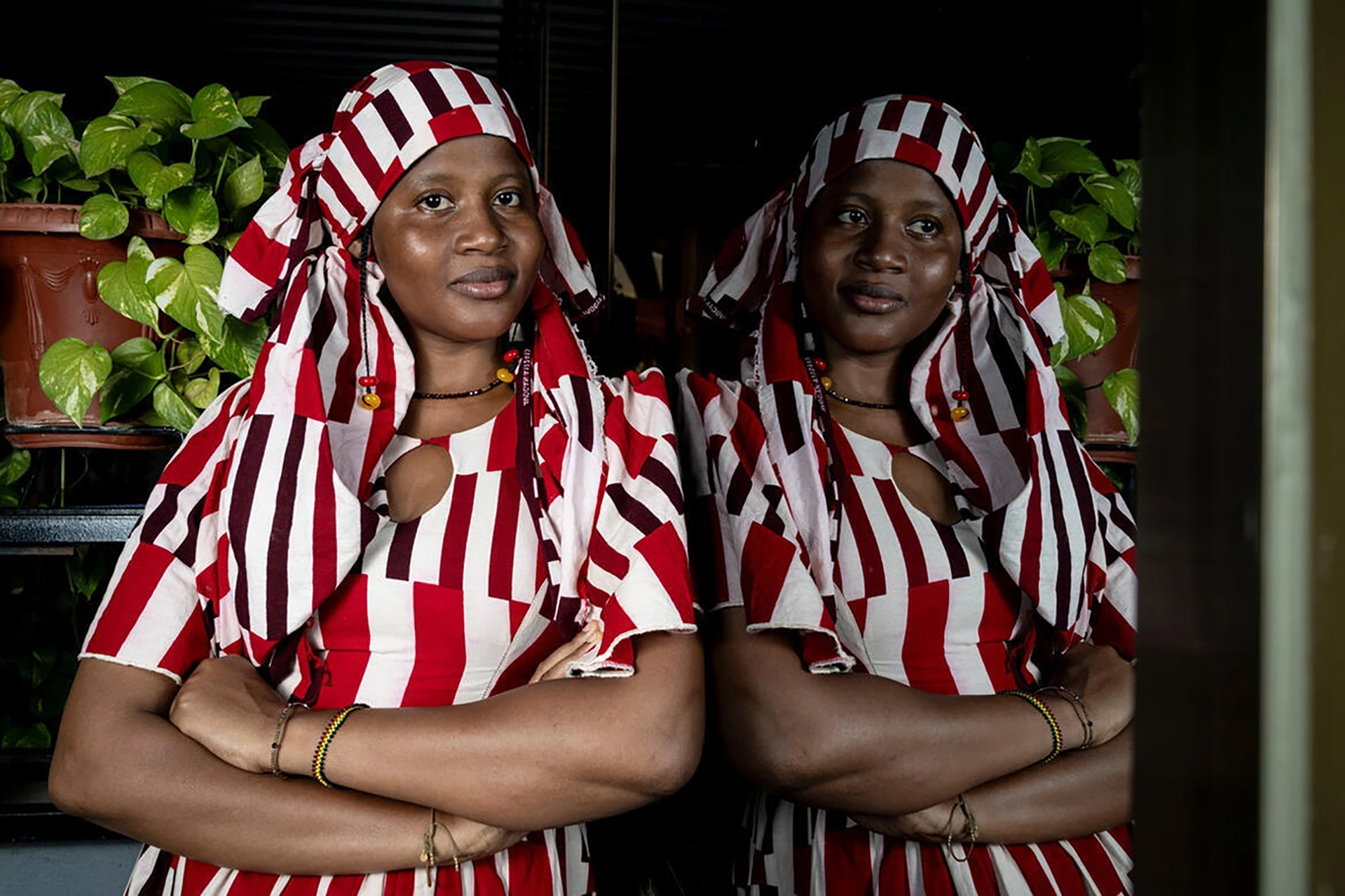
Since 2016, Burkina Faso has been experiencing political instability and violent conflict, leading to over 2 million internally displaced people and more than 200,000 refugees in neighboring countries. Maimouna Ba's organization, Femmes pour la Dignite du Sahel (Women for the Dignity of the Sahel), has offered since 2020 school fees for displaced children and skills training for displaced women. She collected donations, rallied support and encouraged volunteers to join her. Since then, her Un Enfant, Un Parrain (One Child, One Sponsor) programme has matched vulnerable children with individual sponsors who contribute towards their school fees.