

The 12th Annual High-Level Meeting of Caring for Climate, hosted by the UN Global Compact, UN Environment and UN Climate Change, will gather leaders from business, government, finance, civil society, and the UN to discuss improving finance flows to support the national climate transition plans. These plans outline how each country would reduce greenhouse gas emissions and adapt to climate change’s impacts. known as the "Finance COP," this year’s COP29 will focus on aligning climate finance with global needs and turning transition plans into actionable investment roadmaps.
Climate

On the cold, wet and foggy slopes of the Andes mountains in South America, a unique but fragile ecosystem illustrates the interconnection between the three most urgent global environmental crises we face today: biodiversity loss, climate change and land degradation. Known as páramos (alpine tundras), these high mountain ecosystems are found at altitudes higher than 3,000 metres. Considered sacred by Indigenous Peoples, the páramos of the Andes have been inhabited by humans for the past 15,000 years. However, with over 76,000 families living in the Colombian páramos today, unsustainable development has been pressuring this invaluable and delicate ecosystem. That is why the Global Environment Facility (GEF) Small Grants Programme (SGP), implemented by the United Nations Development Programme (UNDP), launched the Guardians of the Páramos alliance, in partnership with SWISSAID and World Women’s Corporation Colombia. Over the project’s three years of implementation, a total of 2,328 people participated, most of them rural women.

How can social protection help those most vulnerable to the worst impacts of climate change?
In this episode of ILO's The Future of Work podcast, Kumi Naidoo, a longtime human rights and climate justice activist, and Shahra Razavi, Director of the ILO’s Universal Social Protection department, discuss the issue.
Iceland has created the world's first Glacier Graveyard on the Seltjarnarnes Peninsula, symbolizing the loss of glaciers due to climate change. It features memorial tombstones for glaciers that have melted, such as the Okjökull Glacier. This initiative aims to raise awareness about the rapid disappearance of glaciers worldwide.

The World Meteorological Organization report on the State of the Climate in the South-West Pacific 2023 shows how weather-related disasters are undermining socio-economic development, as well as threatening health, food and water security in the region. The report was launched yesterday and provides a snapshot of climate indicators like temperatures, sea level rise, ocean heat and acidification and extreme weather, alongside risks and impacts.

Renewable energy solutions are providing a more reliable source of electricity for millions of people in Yemen – and improving their access to essential services.
The Rings of Fire 2024 report offers vital recommendations for sporting authorities to prevent disruption and minimize heat risks.

Across the globe, the way Indigenous Peoples produce, transform and consume food is based on a deep knowledge of the local ecosystems. WFP is tapping into this knowledge to fight hunger.

Sand and dust storms are an essential element of the Earth’s natural bio-chemical cycles, but are also caused in part by human-induced drivers including climate change, unsustainable land management, and water use, and in turn sand and dust storms contribute to climate change and air pollution. At least 25 per cent of global dust emissions originate from human activities. Sustainable water and land management practices can decrease the impacts of sand and dust storms. The International Day of Combating Sand and Dust Storms (12 July) brings attention to this formidable and wide-spread challenge.
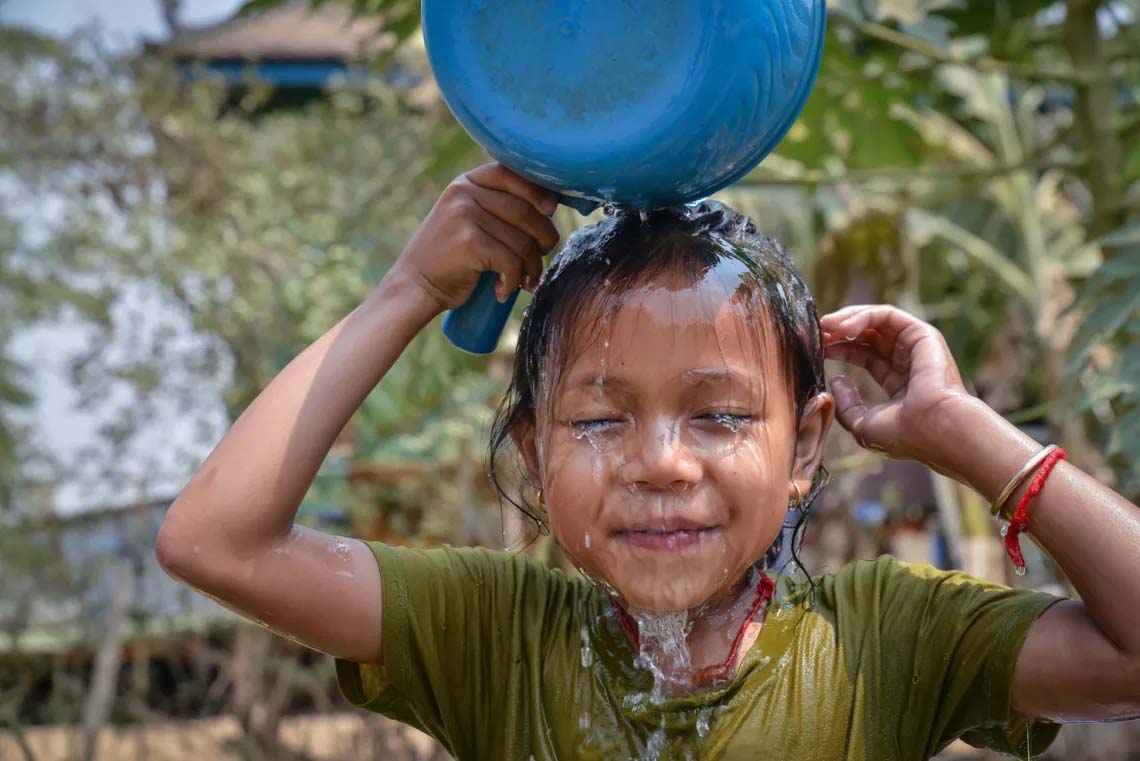
Climate change is raising global temperatures and causing historic heat waves. More countries are facing hotter days more frequently, with more intensity and for longer periods. The heat stress caused by exposure to heat waves can negatively affect health and well-being, especially for infants and young children. As heat waves become more frequent and last longer, the need for urgent action grows stronger. Preparedness can protect vulnerable populations, especially children. UNICEF encourages governments and partners to join the Children’s Environmental Health Collaborative.

We are at a critical juncture in the climate crisis, and 2024 is a landmark year for democracy. These two historical milestones are not just coinciding; they are intertwined and essential to the shape of our future. In what’s being called a ‘super year’ for elections, half of the world’s adult population will have the chance to go to the polls, and climate action is one of the factors which affect how people vote. With a changing political landscape, 2024 could be a turning point to stabilize the climate and secure a livable planet for today and for generations to come.

Tropical Cyclone Freddy has been officially recognized by the WMO as the longest-lasting tropical cyclone on record, lasting 36 days and covering approximately 12,785 kilometers across the Indian Ocean basin.

Artificial intelligence (AI) technologies have the potential to leapfrog climate solutions around the globe, transforming climate mitigation and adaptation approaches. However, skill gaps exist between AI providers, governments and users. Moreover, the ethical and safe use of this tool for the climate will require strong enabling and regulatory frameworks. Making AI a meaningful climate technology also requires minimizing the emissions and resource impact of the technology itself. UNU-EHS and UNFCCC are hosting a meeting in Bonn (1-2 July) with experts, representatives and decision makers.

Desertification affects around 45 per cent of Africa’s land, with 55 per cent of this area considered at “high” or “very high” risk of further degradation. That is a huge threat to food security and sustainable development on a continent whose population is expected to grow by nearly 1 billion by 2050. Through Regreening Africa, an award-winning initiative, Ethiopian villagers have replanted trees and shrubs, which are helping to counter desertification. The initiative has restored more than 350,000 hectares across Ethiopia, Ghana, Kenya, Mali, Niger, Rwanda, Senegal and Somalia. It has done so by reaching more than 600,000 households through its training and tree-growing efforts.

Small Island Developing States (SIDS) are susceptible to extreme weather events, rising seas and temperatures, coastal erosion and biodiversity loss – all caused or exacerbated by climate change. Children and young people living in the SIDS are especially vulnerable: a degraded environment affects them physically and psychologically. This is why youth action to protect SIDS is so important. On the eve of the 4th International Conference on Small Island Developing States (SIDS4) in Antigua and Barbuda, children and young people representing 35 of the 57 Small Island Developing States gathered at the Children and Youth Action Summit – to ensure that their voices are heard at this once-in-a-decade global event. Pictured: Children play by the sea on reclaimed land in Tuvalu.